 |
|
Email Newsletter     |
|
|
Recently in Washington Last week the House passed H.R. 5078, the Waters of the United States Regulatory Overreach Protection Act, which prohibits the EPA and Army Corps of Engineers from developing, finalizing, adopting, implementing, or enforcing a proposed rule redefining “waters of the United States.” The bill passed 262-152 with Congressman Simpson’s support. Simpson is a cosponsor of H.R. 5078. The House also passed H.R. 3522, the Employee Health Care Protection Act of 2014. This bill specifies that health insurance coverage offered in the group market in 2013 must be grandfathered into Obamacare even if it doesn’t meet the minimum essential coverage requirement of the law, allowing small businesses to continue offering plans that were previously available but have been deemed non-compliant by Obamacare. Simpson also supported this bill. Additionally, legislation authored by Congressman Simpson, H.R. 4283, to authorize facilities maintenance on the Salmon River in Idaho, passed the House and has been sent to the U.S. Senate for consideration. Idaho Congressman Mike Simpson cosponsored and supported final passage of H.R. 5078, the Waters of the United States Regulatory Overreach Protection Act, that supports the existing partnership between states and the federal government by preventing EPA and the Army Corps of Engineers from redefining “waters of the United States” under the Clean Water Act. This bill addresses widespread concerns with the Environmental Protection Agency’s (EPA) new proposed rule expanding its jurisdiction over water throughout the country. H.R. 5078 passed the House with a bipartisan vote 262-152. Simpson, who has long been a leader on this issue, included language in his FY2015 House Energy and Water Appropriations Act and authored language in the FY2015 House Interior and Environment Appropriations Act to prohibit the agencies from finalizing a rule on this issue, which the agencies proposed earlier this year. “The EPA’s efforts to expand its jurisdiction under the Clean Water Act by redefining waters of the U.S. have, not surprisingly, resulted in widespread uncertainty and deep concern for the agriculture sector in our state,” said Simpson. “I’m pleased that Congress has acted on this issue to recognize the existing and successful partnerships between states, land users, conservationists, and the federal government and stop the Obama Administration from expanding its jurisdiction over water throughout the U.S.” H.R. 5078 is now under consideration by the U.S. Senate. House Takes Action to Allow Americans to Keep Current Health Insurance Plans Idaho Congressman Mike Simpson last week supported passage of H.R. 3522, the Employee Health Care Protection Act. This bill would allow employees to keep their work sponsored health plans by ensuring that existing group health plans can continue to be sold through 2019. It passed the House 247 to 167. Last year, millions of plans in the individual insurance market were cancelled due to Obamacare mandates. Now, as many as 50 million workers with full coverage could face cancellation or disruption because their work sponsored plans would not meet new minimal essential coverage requirements. H.R. 3522 ensures that group health plans that were offered in 2013 remain available and allows small businesses and their employees to purchase these plans regardless of whether they were on them in 2013. The Administration has provided limited relief for group plans that do not comply with Obamacare, but that relief only lasts through 2016. This bill would extend that opportunity to those not previously on such plans, and add three years of reprieve. The bill expands on the “Keep Your Health Plan Act of 2013,” which applied to individual market plans, and allowed individuals to keep their plans. That bill passed the House late last year. “The President repeatedly promised that if Americans liked their health plans, they could keep them,” Said Congressman Simpson. “We now know that is not true. This bill would allow the Administration to start making good on that promise and also allow for more affordable coverage options to remain available to more Americans.” The bill now moves to the Senate for consideration.
Simpson Bill to Authorize Facilities Maintenance on Salmon River Passes House Legislation authored by Idaho Congressman Mike Simpson that would authorize important but routine maintenance at Smith Gulch on the Salmon River in Idaho has passed the House of Representatives by a vote of 398 to 1. H.R. 4283 would allow the use of limited maintenance equipment needed to maintain the routine functions and safety of the existing lodge. “This legislation clarifies Congress’ intent of the 2004 amendments to the Wild and Scenic Rivers Act which continued the existing use and occupancy of commercial services in this corridor of the Salmon River,” Simpson said. “The use of maintenance equipment would allow the lodge to eliminate the reliance on outdated energy sources and replace them with modest renewable energy sources, all while complying with existing laws.” Currently, the Forest Service does not believe it has clear authorization to permit the use of the equipment necessary for the general upkeep of the facilities at the lodge. This bill clarifies the authorization so the corridor can be managed as it was intended under the Wild and Scenic Rivers Act. H.R. 4283 will now move to the U.S. Senate for consideration. Floor Schedule MONDAY, SEPTEMBER 15TH Legislation Considered Under Suspension of the Rules: 1) H.R. 4771 - Designer Anabolic Steroid Control Act, as amended (Sponsored by Rep. Joe Pitts / Energy and Commerce Committee) 2) S. 2154 - Emergency Medical Services for Children Reauthorization Act of 2014 (Sponsored by Sen. Robert Casey / Energy and Commerce Committee) 3) H.R. 83 - To require the Secretary of the Interior to assemble a team of technical, policy, and financial experts to address the energy needs of the insular areas of the United States and the Freely Associated States through the development of action plans aimed at reducing reliance on imported fossil fuels and increasing use of indigenous clean-energy resources, and for other purposes, as amended (Sponsored by Del. Donna Christensen / Energy and Commerce Committee) 4) H.R. 3044 - To approve the transfer of Yellow creek Port properties in Iuka, Mississippi (Sponsored by Rep. Alan Nunnelee / Transportation and Infrastructure Committee) 5) S. 1086 - The Child Care and Development Block Grant Act of 2014, as amended (Sponsored by Sen. Barbara Mikulski / Education and Workforce Committee) 6) H.R. 5108 - To establish the Law School Clinic Certification Program of the United States Patent and Trademark Office, and for other purposes (Sponsored by Rep. Hakeem Jeffries / Judiciary Committee) 7) H.R. 3006 - To authorize a land exchange involving the acquisition of private land adjacent to the Cibola National Wildlife Refuge in Arizona for inclusion in the refuge in exchange for certain Bureau of Land Management lands in Riverside County, California (Sponsored by Rep. Ken Calvert / Natural Resources Committee) 8) S. 476 - A bill to amend the Chesapeake and Ohio Canal Development Act to extend to the Chesapeake and Ohio Canal National Historical Park Commission(Sponsored by Rep. Ben Cardin / Natural Resources Committee) 9) S. 1603 - Gun Lake Trust Land Reaffirmation Act (Sponsored by Sen. Debbie Stabenow / Natural Resources Committee) 10) H.R. 5205 - Northern Nevada Land Conservation and Economic Development Act (Sponsored by Rep. Mark Amodei / Natural Resources Committee) 11) H.R. 3222 - Flushing Remonstrance Study Act (Sponsored by Rep. Grace Meng / Natural Resources Committee) 12) H.R. 2569 - Upper Missisquoi and Trout Wild and Scenic Rivers Act(Sponsored by Rep. Peter Welch / Natural Resources Committee) 13) H.R. 4119 - West Hunter Street Baptist Church Study Act (Sponsored by Rep. Hank Johnson / Natural Resources Committee) 14) H.R. 5405 - Promoting Job Creation and Reducing Small Business Burdens Act, as amended (Sponsored by Rep. Michael Fitzpatrick / Financial Services Committee) 15) H.R. 3374 - American Savings Promotion Act, as amended (Sponsored by Rep. Derek Kilmer / Financial Services Committee) 16) H.R. ____ - Insurance Capital Standards Clarification Act of 2014(Sponsored by Rep. Andy Barr / Financial Services Committee) 17) H.R. 2866 - Boys Town Centennial Commemorative Coin Act, as amended(Sponsored by Rep. Lee Terry / Financial Services Committee) 18) H.R. 2996 - Revitalize American Manufacturing and Innovation Act of 2013, as amended (Sponsored by Rep. Tom Reed / Science, Space, and Technology Committee)
On Thursday, the House will convene at 9:00 a.m. and recess immediately. The House will reconvene at approximately 9:45 a.m. for the purpose of receiving, in a joint meeting with the Senate, the Honorable Petro Poroshenko, President of Ukraine. The House will meet at 12:00 p.m. for legislative business. On Friday, the House will meet at 9:00 a.m. for legislative business. Last votes expected no later than 3:00 p.m. Legislation Considered Under Suspension of the Rules: 1) H.R. 3593 - The VA Construction Assistance Act of 2014, as amended(Sponsored by Rep. Mike Coffman / Veterans’ Affairs Committee) 2) H.R. 5404 - Department of Veterans Affairs Expiring Authorities Act of 2014, as amended (Sponsored by Rep. Jeff Denham / Veterans’ Affairs Committee) 3) H.R. 4276 - Veterans Traumatic Brain Injury Improvement Act of 2014(Sponsored by Rep. Bill Cassidy / Veterans’ Affairs Committee) 4) S. 2258 - Veterans’ Compensation Cost-of-Living Adjustment Act of 2014(Sponsored by Sen. Mark Begich / Veterans’ Affairs Committee) 5) H.R. 24 - Federal Reserve Transparency Act of 2013 (Sponsored by Rep. Paul Broun / Oversight and Government Reform Committee) 6) H.R. 5169 - Senior Executive Service Accountability Act, as amended(Sponsored by Rep. Tim Walberg / Oversight and Government Reform Committee) 7) H.R.5170 - Federal Records Accountability Act of 2014, as amended(Sponsored by Rep. Mark Meadows / Oversight and Government Reform Committee) 8) H.R. 5418 - To prohibit officers and employees of the Internal Revenue Service from using personal email accounts to conduct official business(Sponsored by Rep. Charles Boustany / Ways and Means Committee) 9) H.R. 5419 - To amend the Internal Revenue Code of 1986 to provide for a right to an administrative appeal relating to adverse determinations of tax-exempt status of certain organizations (Sponsored by Rep. Charles Boustany / Ways and Means Committee) 10) H.R. 5420 - To amend the Internal Revenue Code of 1986 to permit the release of information regarding the status of certain investigations (Sponsored by Rep. Charles Boustany / Ways and Means Committee) 11) H.R. 3043 - Tribal General Welfare Exclusion Act of 2013 (Sponsored by Rep. Devin Nunes / Ways and Means Committee) 12) H.R. 495 - Free File Program Act of 2014, as amended (Sponsored by Rep. Peter Roskam / Ways and Means Committee) 13) H.R. 4137 - Preserving Welfare for Needs Not Weed Act (Sponsored by Rep. Dave Reichert / Ways and Means Committee) 14) H.R. 4994 - Improving Medicare Post-Acute Care Transformation (IMPACT) Act of 2014, as amended (Sponsored by Rep. Dave Camp / Ways and Means Committee) 15) H.R. ___ - To amend title 49, United States Code, to provide for limitations on the fees charged to passengers of air carriers (Sponsored by Rep. Richard Hudson / Homeland Security Committee) H.J. Res. 124 - Continuing Appropriations Resolution, 2015 (Subject to a Rule)(Sponsored by Rep. Hal Rogers / Appropriations Committee) H.R. ___ - American Energy Solutions for Lower Costs and More American Jobs Act (Subject to a Rule) (Sponsored by Rep. Lee Terry / Natural Resources Committee / Energy and Commerce Committee) H.R. ___ - Jobs for America Act (Subject to a Rule) (Sponsored by Rep. Dave Camp / Ways and Means Committee) In the News Failure to fund the battle against wildfires Congress still hasn’t figured out how to pay for wildfires. Choked by partisan bickering and entrenched refusals to compromise, the 113th Congress has passed the fewest pieces of legislation of any Congress in the past two decades – just 108 significant laws, compared to nearly 170 per session from 1995 to 2010. One of the most notable bills languishing without action would fix the long-standing, serious problem of how we pay for fighting wildfires without plundering the federal programs meant to keep the woods from burning. “It’s a catch-22,” says Jim Ogsbury, executive director of the Western Governors’ Association. “Firefighting shouldn’t come at the expense of fire prevention.” Each year, across the nation, wildfires burn an average of 7 million acres and, while the U.S. Forest Service allocates about 40 percent of its budget to firefighting, in extreme years that funding burns up by July or August, a month or more before fire season ends. Then the borrowing begins. Staffers call it “fire stealing” – taking money to fight fires from forest stewardship, research and recreation. Congress is supposed to return that borrowed money but, even when it does, work has already been disrupted and, ironically, funding is often yanked from projects that could help reduce the risk and intensity of wildfires. During 2012 and 2013, roughly $1 billion was pilfered, leaving the agency too broke to thin trees near homes in Arizona’s Verde watershed, for example, or reduce fire hazards in California’s Tahoe National Forest. Federal and state officials and policymakers agree that the current budgeting model, also used by the Department of Interior, is broken. Firefighting costs keep climbing. Wildfire season is two months longer than it used to be and, since the 1970s, the average acreage burned has increased five-fold. Meanwhile, development keeps encroaching on forests, forcing firefighters to defend homes, an expensive — and dangerous — task. The most promising remedy so far has been stalled out in the House since last December. Called the Wildfire Disaster Funding Act, it would treat the biggest wildfires like any other natural disaster, allowing land management agencies to tap a $2.7 billion federal disaster relief account, like FEMA does after hurricanes and earthquakes. That would let agencies fully fund existing programs, including those that reduce fire danger. This is the same approach proposed in President Obama’s 2015 budget. The Wildfire Disaster Funding Act has bipartisan support across Congress. Sponsored by Sens. Ron Wyden, D-Ore., and Mike Crapo, R-Idaho, and by Reps. Mike Simpson, R-Idaho, and Kurt Schrader, D-Ore., it’s garnered 62 Republican co-sponsors and 87 Democratic co-sponsors. More than 200 organizations have endorsed it, ranging from the American Farm Bureau Federation to the American Loggers Council and The Nature Conservancy – even the National Rifle Association. Five Western governors sent letters supporting the bill and Interior Secretary Sally Jewell has urged its passage. Yet the Wildfire Disaster Funding Act has gone nowhere, thanks to opposition from two powerful House members: Budget Chair Paul Ryan, R-Wis., and Natural Resources Chair Doc Hastings, R-Wash. In July, Ryan sent his colleagues a letter stating that the bill would break the federal budget by increasing spending and deficits. Simpson and Schrader have countered that their proposal doesn’t change total spending. Both Ryan and Hastings are pushing instead for Senate action on Hastings’ Restoring Healthy Forests for Healthy Communities Act, which the House passed last fall. It doesn’t solve the fire-borrowing problem, but supporters say it would reduce fire danger, and hence suppression costs, by expediting grazing and logging projects that remove fuel from forests. However, the bill would also reduce environmental review and limit public comment, and President Obama has said he would veto it. The administration proposed an emergency infusion of $615 million to prop up Forest Service budgets this fall, since any legislative fix wouldn’t take effect until next year. But that request, bundled with a controversial immigration measure, failed to pass either chamber. So Congress went into the August recess without action and, as major wildfires continue to burn in Washington, Oregon and California, the Forest Service is faced with “borrowing” yet again. On Aug. 15, the Western Governors’ Association sent an urgent letter to House and Senate leaders asking them to “resolve this burgeoning problem for the West without further delay.” Now that Congress is back in session, perhaps representatives will finally act. “There’s always the possibility that common sense will break through the ideological arguments,” says Gov. Jay Inslee of Washington state, where summer wildfires have burned roughly 400,000 acres and 370 homes, and killed one person. “Especially if people in the House could stand next to a charred family home.” Jodi Peterson is a contributor to Writers on the Range, a column service of High Country News, in Paonia, Colo., where she is the magazine’s managing editor. |
MEDIA CENTER
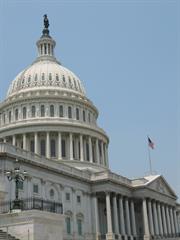 200th Anniversary of "Star-Spangled Banner" If you are having trouble reading this message, try viewing the web version |
| BIOGRAPHY | NEWS CENTER | ISSUES | SERVICES FOR YOU | 2ND DISTRICT | CONTACT | |