 |
|
Email Newsletter     |
|
|
Week of February 25, 2013 The Worst of All Possible Options is Doing Nothing By Senator Mike Crapo and Congressman Mike Simpson Sen. Alan Simpson (R-Wyoming), Sen. Mark Warner (D-Virginia) and President of the Committee for a Responsible Federal Budget Maya MacGuineas recently joined us at a federal fiscal issues symposium hosted by the University of Idaho’s McClure Center for Public Policy Research. The symposium provided an opportunity for us to sit down with some of those working to find solutions to America’s fiscal crisis and discuss with Idahoans the debt crisis that threatens our nation’s future. America is at a debt-to-Gross-Domestic-Product ratio that no nation in the last 200 years has been able to sustain without serious economic consequences. As panelist Maya MacGuineas framed it, our debt levels are already doing damage: “Our economy is not growing as fast as it otherwise could be. … We are not going to be able to have a vibrant economy until we quit borrowing so much.” The solutions are difficult but achievable, and require that all options must be on the table. We know that we must control federal spending, and a revenue solution is part of the remedy. We know that we must have budget enforcement mechanisms that will finally keep Congress within adopted budget limits, and we know that there is a pathway out of this if we act now. We also know that the worst of all possible options is doing nothing. If we do nothing, our entitlement programs — Medicare, Medicaid and Social Security continue screaming toward insolvency. If we do nothing, the bond markets will solve this program rather than Congress or the President, and the consequences will be devastating. But, we have opportunities to make progress in this terrible crisis. We have the opportunity to reform the overly-burdensome tax code and make America a strong, competitive economy again. We must enact pro-growth tax reform, which would simplify the tax code for all Americans, grow our economy and make American businesses more competitive. We have the opportunity to reform our entitlement programs and put them on paths to solvency. We also have the opportunity to put in place budget enforcement mechanisms that give Americans confidence that federal spending limitations will be honored. Achieving these reforms would reassure America’s future. This is the economic challenge of our lifetime and will determine the future of our country. We must come together and work out a solution that includes tax and entitlement program reform, deficit reduction and tough budget enforcement mechanisms. It should, and must, include the participation of all Americans in finding and implementing solutions. During the symposium, we took questions about whether spending cuts through sequestration are expected to take effect, the future of Social Security and Medicare, the impacts of potential defense spending cuts and expected changes in support of veterans. We heard from a small business owner seeking tax certainty and simplicity and a family physician wondering about the impacts on affordable health care if something or nothing is done to address the deficit. We heard from a local mayor and county commissioner wondering about the impacts of deficit reduction on the ability of communities to provide necessary services. We heard from a dairy farmer interested in passage of a Farm Bill with existing farm programs. We heard from a college student and teacher wondering about the potential impacts of deficit reductions on education. We thank the McClure Center for hosting this valuable discussion. We hope that through this symposium and others more Americans gain a deeper understanding of the solutions necessary to avoid the worst option — doing nothing — by utilizing our opportunities to strengthen our economy. The symposium, which was broadcast on Idaho Public Television, can be accessed through the following link: http://video.idahoptv.org/video/2337467115. Floor Schedule MONDAY, FEBRUARY 25TH H.R. 667 - To redesignate the Dryden Flight Research Center as the Neil A. Armstrong Flight Research Center and the Western Aeronautical Test Range as the Hugh L. Dryden Aeronautical Test Range (Suspension, 40 Minutes of Debate) (Sponsored by Rep. Kevin McCarthy / Science Committee) TUESDAY, FEBRUARY 26TH H.Res. __ - Academic Competition Resolution of 2013 (Suspension, 40 Minutes of Debate) (Sponsored by Rep. Candice Miller / House Administration Committee) WEDNESDAY, FEBRUARY 27TH, AND THURSDAY, FEBRUARY 28TH On Thursday, the House will meet at 9:00 a.m. for legislative business. Last votes expected no later than 3:00 p.m. S. 47 - Violence Against Women Reauthorization Act of 2013, Rules Committee Print (Subject to a Rule) (Sponsored by Sen. Patrick Leahy / Judiciary Committee) FRIDAY, MARCH 1ST In the News Tough calls to be made in ongoing debt crisis Leaders from both parties, including Idaho's delegation, await serious talks about cutting the huge U.S. deficit.
Rocky Barker, Idaho Statesman, February 20, 2013 Sen. Mike Crapo and Rep. Mike Simpson expect $85 billion in automatic budget cuts to go into effect March 1 before their colleagues and the president get down to business. Both Republican lawmakers are prominent members of bipartisan groups in Congress dedicated to trimming up to $5 trillion from the growing federal debt over the next decade. They say that both tax increases and cuts to entitlement programs, such as Medicare, have to be on the table. Crapo said Tuesday that reducing the debt before the United States loses its ability to borrow at low rates is the most critical issue facing the nation. "The American Dream is on the line," Crapo said. Simpson and Crapo were in Boise on Tuesday for a symposium on the debt, co-sponsored by the James and Louise McClure Center for Public Policy at the University of Idaho and Idaho Public Television. They joined two high-powered figures in the effort to focus attention on fiscal issues: former Republican Sen. Alan Simpson of Wyoming, who co-chaired the Simpson-Bowles Commission on the fiscal crisis; and Sen. Mark Warner, D-Va., one of the "Gang of Six" senators with Crapo seeking a "grand deal" on the deficit. Alan Simpson came to Boise after he and Erskine Bowles, Bill Clinton's former chief of staff, unveiled a new proposal to avoid the approaching automatic spending cuts while trying to deal with debt drivers such as Medicare. Their plan would cut the deficit by $2.4 trillion over the next decade through a mix of health care reform, closing tax loopholes and Social Security adjustments. "We feel we've succeeded beyond all our dreams because we've pissed off everyone in America," said Alan Simpson. Idaho's Crapo and Simpson said that Congress has been unwilling to undertake a painful restructuring of entitlement programs. It also has been unwilling to reform the tax code, which could mean getting rid of some popular breaks. "Sequestration" is the formal term for the automatic across-the-board cuts that are on the horizon. After those "stupid" cuts are made, Mike Simpson said, Congress will have to address a possible shutdown of the government and deal with raising the debt ceiling again. "I think the next 90 to 100 days are going to decide the future of our country," Mike Simpson said. It will take a bipartisan deal, according to Crapo, because the public is not going to like what has to be done to prevent the nation from losing its solvency. "The worst option is the status quo," said Crapo, who served on the 2010 Simpson-Bowles panel, which made recommendations that were never enacted. Warner said that sequestration will cost taxpayers more money than they will save in many cases. For instance, multiyear military contracts often provide savings of 20 percent to 30 percent over short-term contracts, which could be lost to across-the-board cuts, he said. Idaho's Simpson, who has teamed up with Democratic Rep. Steny Hoyer of Maryland in supporting what they call the "go big" plan, is hopeful that a deal can be forged this year. "I honestly believe there is a governing majority in the House and Senate ready to make the tough vote," Mike Simpson said. In Washington on Tuesday, President Barack Obama warned that "people will lose their jobs" if Congress doesn't act to avoid sequestration. The president said that the immediate spending cuts would affect the full range of government.
|
MEDIA CENTER
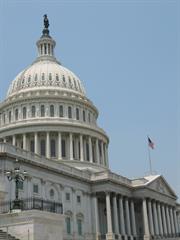 Simpson Responds to the State of the Union If you are having trouble reading this message, try viewing the web version |
| BIOGRAPHY | NEWS CENTER | ISSUES | SERVICES FOR YOU | 2ND DISTRICT | CONTACT | |