 |
|
Email Newsletter     |
|
|
Recently in Washington Last week the House passed H.R. 1837, the San Joaquin Valley Water Reliability Act, which addresses a long standing conflict between water users and the Endangered Species Act in California’s Central Valley. The House also passed H.R. 2117, the Protecting Academic Freedom in Higher Education Act, which reverses Obama Administration higher education regulations, as well as H.R. 1433, the Private Property Rights Protection Act of 2012, which affirmed that the government does not have the right to take private property for economic development purposes. Congressman Simpson is a cosponsor of H.R. 1433. Simpson Promotes Nuclear Energy in House Hearing The Administration decided to abandon the 30 year, $11 billion effort to create a final repository for spent nuclear fuel and created the Blue Ribbon Commission to determine a path forward in how to deal with the nations spent nuclear fuel. The Commission submitted the final report in January. Simpson asked Secretary Chu whether DOE has embraced the Blue Ribbon Commission’s recommendations and whether the department intends to submit legislation to Congress for review or implement changes through administrative fiat, as the Administration did by abandoning Yucca Mountain. Chu responded that a number of the recommendations will require congressional action. “Don’t let this turn into a Simpson-Bowles proposal, where we go out and make recommendations and then no one pushes it forward,” warned Simpson. “If you’re going to [act on the recommendations], then push them forward and come and work with Congress to get it done.” Simpson also expressed concern about proposals in the budget to impose huge increases for renewable energies while the administration has requested decreases in funding for advanced reactor technology like Small Module Reactors that have the potential to be safer and easier to finance compared to existing reactors. “Fifty percent of our electricity is produced by coal, 20% by nuclear power. Yet when I look at your budget, I look at huge increases in renewable energy funding, which makes up only a small portion of our energy portfolio, and cuts in the other area that’s producing most the electricity, and frankly I’m disappointed,” said Simpson. “Seems to me like there is an agenda of trying to push green technology, when I think nuclear energy is green technology…If you’re really going to address global climate change, you had better adopt nuclear energy, and it doesn’t seem like we’re doing that in this budget. This is the first time I’ve seen a retrenchment in this administration in advancing nuclear energy. The talk is all there, but the budget doesn’t reflect that.” The Subcommittee will be hearing from multiple offices within the Department of Energy in the coming weeks. View Congressman Simpson’s interactions with Secretary Chu here. Simpson Scrutinizes EPA Budget Request, Questions Regulatory Agenda Simpson started the hearing by reminding the subcommittee about the drastic change in the agency's budget since he became chairman of the subcommittee. “When we met last year in this room to discuss your 2012 proposal, I noted that we were at a critical juncture as we had not yet finished our work on the fiscal year 2011 budget,” said Simpson. “Since then the Appropriations Committee has had a productive year and passed spending bills for both fiscal year 2011 and 2012. In doing so we reduced discretionary spending in the Interior and Environment bill by over $3 billion, of which $1.85 billion came from the EPA budget. This amounts to an 18 percent cut to EPA's budget in one calendar year." Simpson expressed long-standing concern about the guidance EPA issued last year regarding which waters are subject to EPA regulation under the Clean Water Act, an issue that has troubled Idaho’s farmers and water users for years. “I’m concerned about this guidance because many of the groups advocating for it want EPA to control all the waters of the United States. Many of us in the west think that the current ‘navigable waters’ definition is the right definition,” said Simpson.“It is not a matter of whether or not we should protect waters from degradation but of who is protecting them. I think that is a responsibility of the states.” Simpson also expressed his continued concern that EPA is imposing an unnecessary regulatory agenda on the American people that is hurting the economy and surpassing the agency's authority. Referring to a recent cover story in The Economist entitled, "Overregulated America,” he said, “Currently EPA has 26 regulations under review at OMB, including the Clean Water Act guidance that defines navigable waters. The one thing I came away from this article with is that I am concerned that EPA’s cost-benefit analysis is not public or transparent. The agency needs to keep this subcommittee informed about its regulatory agenda as we put the budget together.” Simpson Talks Wolves, Invasive Species during Fish and Wildlife Budget Hearing “In Idaho it is difficult to think of the Fish and Wildlife Service without thinking first and foremost of threatened and endangered species,” Simpson said at the beginning of the hearing. “Whether it’s to save snails or slickspot peppergrass, the last thing Idahoans want is the federal government telling them what they can’t do on their own land or otherwise disrupting a sustainable way of life they’ve known for generations. There has got to be a better way to properly balance recovery with people’s livelihoods.” Simpson questioned the agency regarding funding for wolf management in Idaho and Montana. Last year Simpson included language in the FY11 continuing resolution that directed the Service to reissue an earlier decision to remove wolves in those states from the endangered species list. Simpson aims to ensure that the states of Idaho and Montana have adequate funding to defray the costs of ESA requirements to monitor wolf populations for five years post-delisting. Chairman Simpson also raised the issue of quagga and zebra mussels, which pose a serious threat to water infrastructure in Idaho. In FY12, the subcommittee allocated $1 million in the Fish and Wildlife Service budget for mandatory inspections and decontaminations at infested federally-managed water bodies, which the Director indicated would be focused on preventing boats at infested Lake Mead from spreading into Idaho and other western states. “I’m also concerned that when I meet with stakeholders who do invasive species work on the ground, they complain that very little of the money that is appropriated for these purposes actually gets on the ground,” said Simpson. “I recognize that this is not necessarily a Fish and Wildlife Service issue; I’m talking about invasive species funding across the board, much of which is in the Department of Interior or USDA. This subcommittee intends to focus on invasive species in general and how we are spending that money, because ultimately we want the money on the ground, addressing the problem.” Committee Schedule Tuesday, March 6 At 10:00 a.m., the House Energy and Water Appropriations Subcommittee is scheduled to hold a hearing on the FY13 budget request for the National Nuclear Security Administration, nuclear nonproliferation, and naval reactors. NNSA Administrator Thomas D’Agostino is scheduled to testify, as are Anne Harrington, Deputy Administrator for Defense Nuclear Nonproliferation, and Admiral Kirkland Donald, Director of Naval Reactors. At 1:00 p.m., Chairman Simpson will hold a House Interior and Environment Appropriations Subcommittee hearing on the FY13 budget request for the U.S. Geological Survey. USGS Director Marcia McNutt is scheduled to testify. At 2:00 p.m., the House Labor, Health and Human Services, and Education Appropriations Subcommittee is scheduled to hold a hearing on the FY13 budget request for the Department of Health and Human Services. Secretary of HHS Kathleen Sebelius is scheduled to testify. Wednesday, March 7 At 1:00 p.m., Chairman Simpson will hold a House Interior and Environment Appropriations Subcommittee hearing on the FY13 budget request for the Bureau of Ocean Energy Management and the Bureau of Safety and Environmental Enforcement. BOEM Director Tommy Beaudreau and BSEE Director Rear Admiral James Watson are scheduled to testify. At 2:00 p.m., the House Energy and Water Appropriations Subcommittee is scheduled to hold a hearing on the FY13 budget request for U.S. Army Corps of Engineers. Assistant Secretary of the Army for Civil Works Jo Ellen Darcy and Acting Chief of Engineers Major General Meredith “Bo” Temple are scheduled to testify. Thursday, March 8 Floor Schedule MONDAY, March 5, 2012 Legislation Considered Under Suspension of the Rules: TUESDAY, MARCH 6TH, AND THE BALANCE OF THE WEEK On Thursday, the House will meet at 9:00 a.m. for legislative business. Last votes expected no later than 3:00 p.m. On Friday, no votes are expected in the House H.R. 4105- To apply the countervailing duty provisions of the Tariff Act of 1930 to nonmarket economy countries, and for other purposes (Suspension, 40 Minutes of Debate) (Sponsored by Rep. Dave Camp / Ways and Means Committee) H.R. 2842 - Bureau of Reclamation Small Conduit Hydropower Development and Rural Jobs Act of 2011 (Subject to a Rule) (Sponsored by Rep. Scott Tipton / Natural Resources Committee) H.R. 3606 - Jumpstart Our Business Startups (JOBS) Act (Subject to a Rule) (Sponsored by Rep. Stephen Fincher / Financial Services Committee) In the News House panel kicks off review of budget request with testy hearing Jean Chemnick, E&E, Thursday, March 1, 2012 Members on the House Interior, Environment and Related Agencies Appropriations Subcommittee grilled Jackson on everything from air quality regulations to a hydraulic fracturing study to EPA's proposal for funding cleanup of Puget Sound, the Chesapeake Bay and the Great Lakes. EPA's funding request is $8.3 billion, more than 1 percent below current funding levels. The number is likely to drop still further before the appropriations process ends -- likely with a continuing resolution or series of resolutions later this year. But subcommittee Chairman Mike Simpson (R-Idaho) said in his opening remarks that the cuts were not "draconian." "It is important to remember that these reductions come on the heels of unprecedented historic increases," he said. The EPA budget increased 35 percent between fiscal 2009 and 2010, after Democrats gained control of the White House. But Appropriations Committee ranking Democrat Norm Dicks of Washington said that by cutting EPA spending, Congress was setting up future generations for deferred maintenance costs and passing other infrastructure and regulatory costs on to cash-strapped states. "Keep doing your job," he told Jackson. "You are good at it, and the health of the American people depends on it." The subcommittee's top Democrat, meanwhile, made a plea for fewer policy riders to be included in the committee's bill this year. Rep. Jim Moran (D-Va.) noted that the Interior-EPA bill did not even pass the House last year because too much time was spent on amendments, most of which would have delayed, limited or rolled back EPA's air and water regulations. "I trust that last year's lesson though has been learned," he said, adding that if authorizing committees such as the House Energy and Commerce Committee want to change existing environmental laws they should do so through normal channels, not the appropriations process. Simpson told reporters later that he hoped for fewer riders himself, because it "muddies up the bill and makes it difficult for the bill to get done." Still, he said he expected many committee members and members of the House to offer amendments that reflect their constituents' concerns. "You've got to understand, a lot of people offer an amendment knowing that it's probably not going to survive until the end," he said. "But they're representing their constituents and doing what their constituents want them to do." He said that the Interior and EPA subcommittee would complete its hearings by the end of March. Controversy over coal mine permits "I've got people with pink slips all over the landscape because you will not process any of these permits in a timely manner as the court has ordered you to do," he said. A federal court in October overturned EPA's enhanced review of dozens of mountaintop-removal mining permits in Appalachia, but the decision did not affect EPA's authority to review -- and in some cases veto -- permit applications it deems in violation of the Clean Water Act. But Rogers insisted that the U.S. District Court decision meant EPA was illegally sitting on more than a hundred mining permits in his region, killing thousands of much-needed jobs. "An impoverished area is getting more impoverished thanks to your actions," he told Jackson. Jackson countered that the 37 mining permits the agency has objected to were rejected because scientists said they would have contaminated local water. Rogers asserted that EPA had not allowed any new permits to move forward since Jackson has been at its helm, but Jackson said after a brief recess that the Army Corps of Engineers had in fact issued 38 permits for mining projects that had been reviewed by her agency, including five in Rogers' home state of Kentucky. Fracking, clean water disputes Rep. Maurice Hinchey (R-N.Y.), a longtime opponent of hydraulic fracturing who will retire at the end of this year, said the country was trying to understand the effects of "fracking." "The public needs more scientifically credible info about what is going on," Hinchey said. But Republicans quizzed Jackson about the direction the study could take. Rep. Cynthia Lummis (R-Wyo.) said she was concerned that Jackson said the agency would review how the method affects air quality, as well as water safety and ecosystems. She asked Jackson to promise that the study would be reviewed by scientists with no anti-fracking bias, and the administrator agreed. Rep. Steven LaTourette (R-Ohio) noted that several agencies will be involved in the study, adding that he hoped they would coordinate their efforts so that they did not duplicate work. "We have a lot of urban legends springing up right now because of hydraulic fracturing," LaTourette said, adding that a study could put to rest questions of whether fracking causes earthquakes, for example. Subcommittee Chairman Simpson questioned Jackson last, asking about EPA's move to classify some additional waterways as falling under its Clean Water Act authority. The White House Office of Management and Budget is currently reviewing a guidance by EPA and the Army Corps, though it would be nonbinding and lacks the force of law. Jackson said EPA and the Army Corps drafted the guidance because it had proved very difficult to determine under whose jurisdiction certain rivers, streams and wetlands fell. "This was meant to provide some greater level of certainty" she said. "The conservation community has been saying for quite some time that we need to have a better definition of what waters are protected under the Clean Water Act," she added. But Simpson said that some environmentalists would likely prefer that every wetland and cow paddy in the country was subjected to regulation under the Clean Water Act. "There is state protection of some of those waters," he noted. "It's just a question of whether the state does it or the federal government does it." The rumor mill "I think EPA has to get on top of the rumors and accusations quicker than you do and let the public know your intentions," he said. "Because we're always going to fear the worst." After the hearing, Simpson told reporters that the public perceived that EPA was overreaching, and it was undermining the important work the agency does in cleaning the environment and helping support state and local infrastructure projects. "The amount of concern by the public that the EPA is overregulating the country, you can cut it with a knife out there," he said. |
MEDIA CENTER
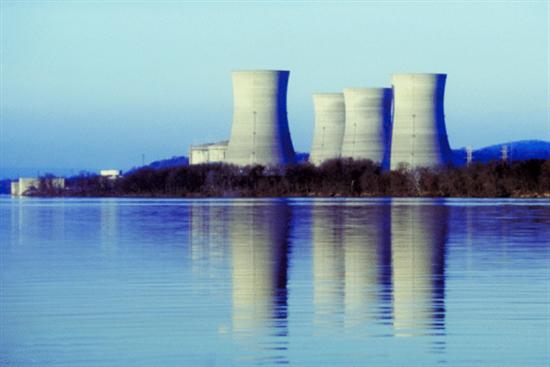 Simpson Emphasizes Need for Nuclear Energy 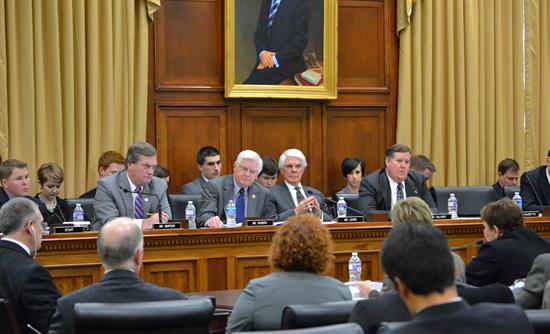 Simpson Criticizes EPA Regulatory Agenda If you are having trouble reading this message, try viewing the web version |
| BIOGRAPHY | NEWS CENTER | ISSUES | SERVICES FOR YOU | 2ND DISTRICT | CONTACT | |