 |
|
Email Newsletter     |
|
|
Recently in Washington
Last week the House passed H.R. 3547, the Consolidating Appropriations Act, commonly called the Omnibus, to fund the government through fiscal year 2014. It included all twelve appropriations bills at a total funding level of $1.012 trillion. It passed 359-67 with Congressman Simpson’s support. It also passed the Senate and became law. The House also passed H.R. 3362, the Exchange Information Disclosure Act, which requires that the administration make available to Congress and the public certain information regarding enrollment in the health exchanges. It passed 259-154 with Congressman Simpson’s support.
House Passes Bill to Reduce Federal Spending While Prioritizing Important Programs Idaho Congressman Mike Simpson last week applauded the House passage of the Fiscal Year 2014 Omnibus Appropriations bill that will provide funds for the operation of the federal government and prevent a government shutdown. It passed the House by a vote of 359-67, and later passed in the Senate and became law. “This bill represents an important step toward getting back to regular order in our appropriations process, and it does so in a responsible manner that reduces total discretionary spending for the fourth straight year—something not done since the 1950’s,” Simpson said. “Republicans have fought hard to cut spending since we took over the majority four years ago, and this agreement continues those efforts by establishing a top line below fiscal year 2009 levels. Since the Republicans took over, we have reduced discretionary spending by $165 billion, nearly undoing the record setting increases by Democrats in previous years.” The Omnibus includes all twelve appropriations bills for fiscal year 2014, and provides funding for every aspect of the government—from national security and resources for our troops to support for American farmers and ranchers, biomedical research at the National Institutes of Health, and maintenance of our roads and bridges. It repeals recently enacted cuts to cost of living adjustments (COLAS) for disabled military retirees and survivors, and it provides no new funding for Obamacare, while reducing the Secretary of Health and Human Service’s “slush fund” for Obamacare exchanges by $1 billion. The bill funds a number of vital priorities for Idaho within the lower overall spending levels. These include increased funding for the Idaho National Lab’s nuclear research programs as well as more than $20 million additional funding for the ongoing nuclear cleanup activities in Eastern Idaho. As Chairman of the House Appropriations Subcommittee on Energy and Water Development, Congressman Simpson played a lead role in deciding funding for all Department of Energy programs. Simpson also praised provisions included in the Interior and Environment portion of the bill that will provide for wildfire suppression, address public lands issues, and make litigation costs transparent. “Not only does this bill provide critical funding in a number of areas important for Idaho, but it also gives agencies clear direction on current Congressional priorities, as well as the stability to budget accordingly to fulfill them,” Simpson said. “Funding our government through short term Continuing Resolutions is unsustainable, and, frankly, not a responsible way to govern. Through this agreement, Congress has fulfilled its duty of keeping our government open, and while no one got everything they wanted in the final package, we have paved the way back to regular order in the weeks and months to come.”
Simpson Secures INL/Nuclear Increases in Omnibus Idaho Congressman Mike Simpson last week announced that the Fiscal Year 2014 Omnibus Appropriations bill reverses substantial cuts to Idaho National Laboratory, the Department of Energy’s Office of Nuclear Energy, and cleanup activities in Idaho. Simpson was recently appointed Chairman of the House Appropriations Subcommittee on Energy and Water Development and had the lead role in deciding funding for all Department of Energy programs. “The Obama Administration sought to cut funding for Idaho National Laboratory and the Office of Nuclear Energy last year and I am happy to report that this bill reverses those cuts and secures substantial increases in a number of critical areas,” said Simpson. “In fact, I have increased funding for INL’s nuclear research programs, ensured full funding for the Lab’s vital security force, and boosted funding by more than $20 million for the ongoing nuclear cleanup activities in Eastern Idaho. This bill not only stabilizes funding at INL after a couple of years of uncertainty, it sends a strong message that INL’s work as the DOE’s lead nuclear energy laboratory is critical to our nation’s energy security.” The FY2014 Omnibus Appropriations bill sets funding for the DOE’s Office of Nuclear Energy at $889 million, including $94 million for Idaho National Laboratory Safeguards and Security. The $889 million funding level represents an increase of $154 million over the President’s request and $36 million over the FY2013 funding level. Nuclear energy research and development programs that receive funding within the $889 million allocation include: -The Idaho Facilities Management account, which covers infrastructure maintenance and improvement at Idaho National Laboratory; is funded at $196.6 million – a $15 million increase over the President’s request; -The Next Generation Nuclear Plant Fuel and Graphite Qualification Program is funded at $33 million, an increase of $17 million above the President’s request; -Small Modular Reactor Licensing Support Programs are funded at $110 million, an increase of $44 million above the President’s request and $40 million above FY2013 funding levels. A portion of the funding is slated for NuScale Power’s Small Modular Reactor which is proposed for construction in Idaho; -The Light Water Reactor Sustainability program, which is managed by INL and promotes the continued safe operation of America’s existing nuclear reactors, is funded at $30 million, an increase of $8.5 million above the President’s request; -Fully funds the Idaho National Laboratory’s Safeguards and Security Program at $94 million. Under sequestration, INL’s Safeguards and Security Program would have been forced to endure devastating cuts impacting operations across the Laboratory; -Within the Office of Naval Reactors, the bill includes $66.5 million for the operation of the Advanced Test Reactor, an increase of $2 million above the President’s request; -The Advanced Test Reactor’s National Scientific User Facility receives a $5 million increase to equip a new post irradiation laboratory at INL; -Split between the Office of Naval Reactors and the Office of Nuclear Energy, the bill contains $37 million for the construction of a Remote Handled Low-Level Waste Disposal Project; -Within the Office of Electricity Delivery and Energy Reliability, the bill includes $5 million for the development of an Electric Grid Test Bed program to enhance existing full-scale electric grid testing capabilities like those at Idaho National Laboratory. The bill also provides $387 million for cleanup activities associated with the Idaho Cleanup Project and the Advanced Mixed Waste Treatment Project co-located on the Idaho desert with Idaho National Laboratory. The funding level of $387 million is an increase of $22 million above the President’s request and allows the significant cleanup activities currently underway to continue. The bill continues Nuclear Regulatory Commission funding for a nuclear waste storage facility at Yucca Mountain to maintain its viability for future use and complete the third safety evaluation report as part of the licensing process. Finally, the bill includes funding of $44 million for environmental infrastructure within the Army Corps of Engineers. The Section 595 Rural Idaho program for community water and waste water infrastructure is eligible for funding within this allocation. Overall, the Energy and Water Development Appropriations bill provides $34 billion dollars for the functions of the Department of Energy, the Army Corps of Engineers, the Bureau of Reclamation and a number of independent agencies, including the Nuclear Regulatory Commission and the Bonneville Power Administration. “While all of this funding is critically important to INL and the advancement of nuclear energy technologies, I cannot stress enough how important it was to reverse the cuts to the guard force,” said Simpson. “Without a fully funded guard force, INL would have been forced to curtail vital operations and layoff additional personnel. I am grateful that this bill rights that wrong.” The complete Conference Report can be found at: http://rules.house.gov/bill/113/hr-3547-sa
Simpson Praises Omnibus Language Protecting Western InterestsOmnibus appropriations bill includes wildfire funding, efforts to make costs more transparent Idaho Congressman Mike Simpson last week lauded provisions included in the Omnibus Appropriations Act for FY14 that protect Western interests and bring more accountability to federal spending. Simpson, former chair of the House Interior and Environment Appropriations Subcommittee, praised provisions included in the bill to provide for wildfire suppression, address public lands issues, and make litigation costs transparent. The bill fully funds wildfire suppression accounts at the 10-year average, providing $3.94 billion for wildfire fighting and prevention programs within the Forest Service and the Department of the Interior. It also fully reimburses agencies for what is known as “fire-borrowing”—when agencies must drain non-suppression accounts to pay for wildfire fighting costs that exceed fire budgets—in 2013. “There is no doubt that providing adequate funding for wildfire suppression must be a top priority, and I’m pleased that this bill provides full funding for these efforts,” said Simpson. “As important, however, is recognizing the impact that wildfire suppression costs have on agencies’ abilities to restore our forests to a healthier state. Fire borrowing robs the agencies of the resources they need for good forest management, creating a cycle of higher costs and unhealthier forests. This bill attempts to stop that cycle by repaying accounts that were drained during last year’s fire season and rejecting significant proposed cuts to this year’s hazardous fuels budget.” The bill includes a number of provisions authored by Simpson that are aimed at preserving responsible access to public land. Among them are provisions to: -Extend for two years long-standing authority to allow the BLM to extend expiring grazing permits while they complete the environmental work required for renewals; -Make vacant grazing allotments available to grazing permittees adversely impacted by drought or wildfire; -Provide for the trailing of livestock across public lands during fiscal years 2014 and 2015; -Continue important conservation efforts to prevent the sage-grouse from being listed as an endangered species; -Restore $1 million to compensate ranchers for livestock killed by wolves; -Prevent agencies from limiting recreational shooting and hunting on federal lands; and -Prohibit the Department of Interior from implementing the Wild Lands initiative. Simpson also praised language that directs the Department of Interior, the Forest Service, and the EPA to make public information regarding the cost of work requested under the Freedom of Information Act (FOIA) and the cost of fees paid by the agencies under the Equal Access to Justice Act (EAJA). “Frivolous lawsuits are one of the largest unbudgeted costs for land management agencies. They divert funding away from critical priorities, but they are rarely accounted for by those agencies,” said Simpson. “In recent years I’ve worked to bring these issues to light and ensure that Congress is aware of these costs—and in fact that agencies themselves are aware of them. I’m pleased that this bill expands on those efforts to bring costs under control and ensure greater accountability of taxpayer dollars.” Simpson also commented on the fact that the omnibus appropriations bill does not include funding for the Payment in Lieu of Taxes (PILT) program. PILT payments go out to counties with a high percentage of federal land, essentially compensating these counties for the fact that the federal government does not pay property taxes. Since 2008, PILT has been automatically funded as a mandatory program, but this authority expired in October at the end of FY2013. “Ensuring that PILT is adequately funded for 2014 remains one of my top priorities. While I am deeply concerned about the lapse of funding for this program, I have been assured that PILT payments will go out for 2014,” said Simpson. “At the end of the day, I hope that we are able to shift PILT back to mandatory funding, likely as part of the Farm Bill, where it is not subject to the whims of the annual budget process. PILT is essentially the government’s property tax on the federal lands it owns, and it needs to be paid in full and on time. Since PILT moved to mandatory funding in 2008, counties have had certainty that the federal government will meet its obligations to them, and I am hopeful that authorizers will act quickly to make sure that continues.”
Idaho Congressman Mike Simpson last week supported H.R. 3362, the Exchange Information Disclosure Act, which passed 259-154. The bill requires the administration to submit to Congress weekly reports that detail a variety of Obamacare statistics that are currently not being released to the public. The report would include the number of visits to the healthcare.gov website, the number of individuals who enroll and pay their first premium, and the ages of enrollees. “It is important that policymakers and the American people are given this information,” said Congressman Simpson. “Since the healthcare.gov rollout the administration has not been very forthcoming, instead only providing snapshots of certain statistics. We need to see the whole picture as this law is rolled out.” The bill would require the administration to provide more details about the information they have revealed to this point. For example, they have announced that more than 250,000 individuals had selected a plan, but did not reveal how many of those are actually enrolling, or how many have actually paid their first month’s premium or enrolled in Medicaid. The bill now moves to the Senate for consideration, where unfortunately almost 170 House passed bills are currently being held up by the Democratic majority. A comprehensive list of those bills can be viewed here http://majorityleader.gov/bill-tracker/.
Simpson Announces Academy Nominations Idaho Congressman Mike Simpson is pleased to announce the following men and women as official nominees to the United States military academies. “It is an honor to nominate Idaho students to the military academies,” said Simpson. “I am always impressed by the quality and character of our youth in Idaho. Each person is a fine example of what our state has to offer. They are bright, articulate, and ready to serve.” Students were selected on the quality of their application, scholastic achievement, references and extra-curricular activities. While a congressional nomination does not guarantee acceptance to the Service Academies, many of Idaho’s nominees are selected for an appointment. The following students were nominated to either the Air Force Academy in Colorado Springs, Colo.; the United States Military Academy in West Point, New York; the United States Naval Academy in Annapolis, Maryland; or the United States Merchant Marine Academy in Kings Point, New York. Nominees are: BOISE -Brielle Ibe Tess - Boise, Unites States Naval Academy, United States Military Academy, United States Air Force Academy -Brycen Deka – Boise, United States Military Academy Austin Box – Boise, United States Merchant Marine Academy, United States Air Force Academy -Vanessa Munro – Boise, United States Military Academy, United States Air Force Academy, United States Merchant Marine Academy -Nathan Pauls – Boise, United States Military Academy -Bridget Wasdahl – Boise, United States Military Academy -Margaret Boggan – Boise, United States Military Academy -Conner Mallet – Boise, United States Air Force Academy, United States Naval Academy -Andrew Wardle – Boise, United States Air Force Academy, United States Naval Academy -Jay Dale Dashiell – Boise, United States Air Force Academy, United States Naval Academy, United States Military Academy -Michaela Piechowski – Boise, United States Naval Academy -Aden Kutsurelis – Boise, United States Naval Academy, United States Merchant Marine Academy -James Zimmerman – Boise, United States Naval Academy Mt. HOME -Shaquille Ellington– Mt. Home, United States Air Force Academy MAGIC VALLEY -Pete Coats – Rupert, United States Naval Academy, United States Military Academy, United States Air Force Academy POCATELLO -Tanner Stuart – Pocatello, United States Naval Academy, United States Military Academy, United States Air Force Academy IDAHO FALLS -Tristan Griffith – Idaho Falls, United States Naval Academy AMMON -Brady Miner – Ammon, United States Air Force Academy REXBURG -Kaden Blaser – Rexburg, United States Naval Academy
In the News By Dan Popkey, Idaho Statesman, January 20, 2014 Idaho GOP Congressman Mike Simpson used his clout as a top appropriator to get white potatoes back on the list of vegetables eligible for purchase under the $6.5 billion Women, Infants and Children (WIC) voucher program operated by the U.S. Department of Agriculture, according to the Wall Street Journal. White potatoes — which include potatoes of every skin color, excepting sweet potatoes — have been barred from purchase by 8.7 million consumers since the USDA said in the mid-2000s that people were eating enough of them already. The typical American gobbles about 100 pounds of spuds a year, but the figure has declined since USDA’s WIC ban, in part because of widespread badmouthing of carbohydrates. Simpson inserted an 85-word provision in the 1,582-page 2014 omnibus budget bill that President Obama signed Friday. The paragraph instructs USDA to allow WIC beneficiaries to purchase any veggie they like, including potatoes. If Agriculture Secretary Tom Vilsack declines to institute the change, he must submit a report to Congress within 15 days explaining himself. “USDA takes this language seriously and will conduct the evaluation expected by Congress,” USDA spokeswoman Brooke Hardison told the Journal. Growers and lawmakers from potato-growing states and have long pressed to restore the good name of the potato. In 2012, 100 members of Congress wrote Agriculture Secretary Tom Vilsack urging him to “carefully reconsider the decision to exclude white potatoes” wrote the Journal’s Elizabeth Williamson. Simpson is one of 12 “cardinals” who chairs a subcommittee of the House Appropriations Committee, giving him special access to insert such provisions. Simpson first secured House passage of his amendment in the Agriculture appropriations bill. Based on that provision, the report for the omnibus spending law included the following: “The agreement expects the Secretary to amend 7 CFR 246.10 in order for state agencies to include all varieties of fresh, whole, or cut vegetables, except for vegetables with added sugars, fats, oils; provided that inclusion of such vegetables contribute towards meeting the special nutritional needs of program participants and increases the availability of low-cost, high nutrient alternatives for participants throughout the year. Within 15 days of any decision not to comply, the Secretary shall submit a report to the Committees explaining such decision.”
|
MEDIA CENTER
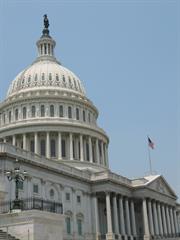 Simpson Supports Exchange Enrollment Transparency Bill If you are having trouble reading this message, try viewing the web version |
| BIOGRAPHY | NEWS CENTER | ISSUES | SERVICES FOR YOU | 2ND DISTRICT | CONTACT | |